T I B S T R E E T T A B E R N A C L E , W U L Y F
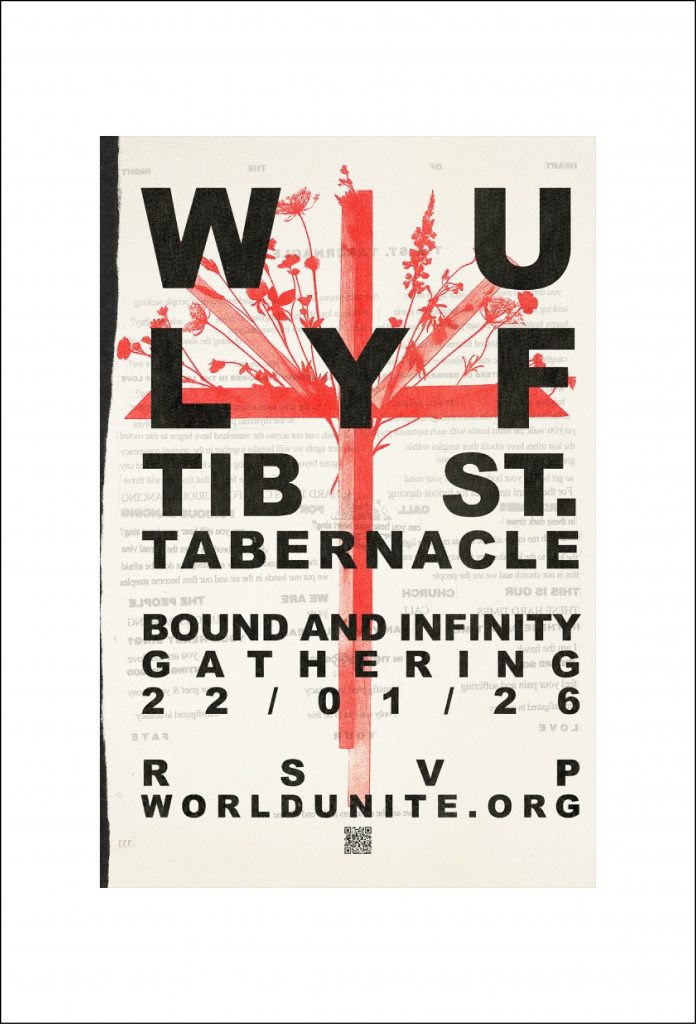
The last event at Bound & Infinity’s premises at 70 Tib Street will be to commemorate the occasion of the new single Tib Street Tabernacle by WU LYF from the upcoming album A Wave That Never Breaks. Ellery James Roberts joins us on the piano to perform new songs from the album, many of which were written and rehearsed at Bound & Infinity.
22nd January, 2026 / 19:00 start / free entry / please RSVP
L A W S O F F O R M : I S T H I S A D A G G E R W H I C H I S E E B E F O R E M E
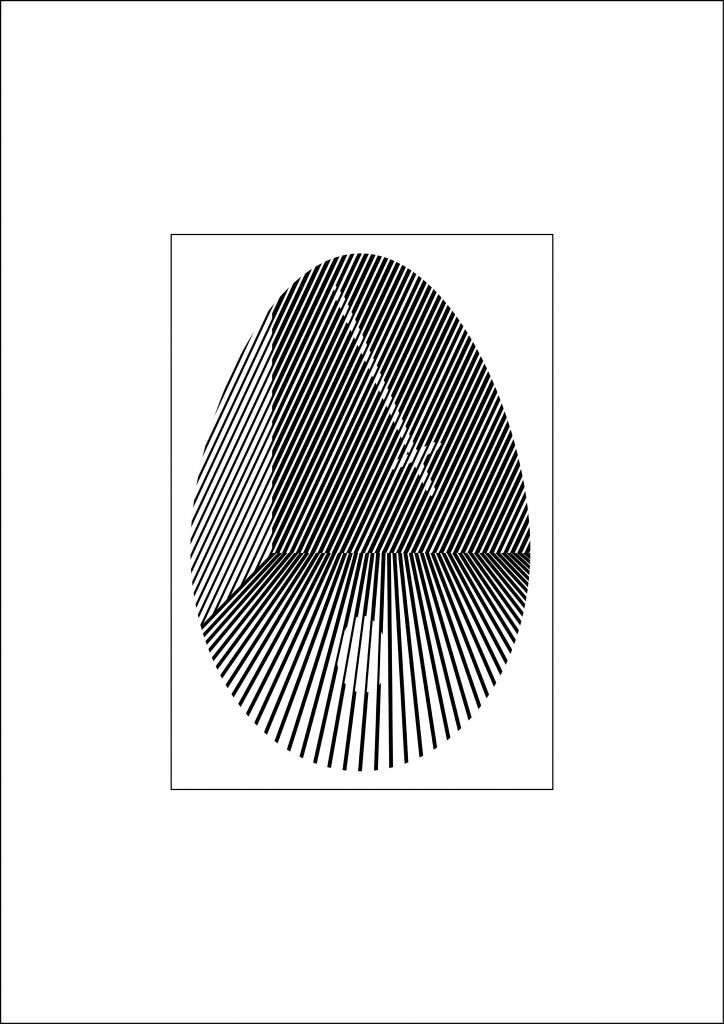
Described as the Tractatus Logico-Philosophicus backwards, Laws of Form starts with first principles, beginning with the third line of the text from the Tao Te Ching, “the nameless is the beginning of the Heaven and the Earth”, this seminal work in the field of logic is based on a simple mark “˥”, called the idea of the first distinction.
Laws of Form shows how a world can come into being using two simple axioms, “the law of calling” and “the law of crossing”. Combined with mathematics, this new calculus reveals a qualitative depth to number that can be used to investigate the ambiguity that has arisen with a more formal approach to science, especially in the field of quantum mechanics.
Laws of Form emerged out of the counter-culture movement of the 1960s and was pioneered by
D R E A M S U N S E E N , A N D R E W C H A L K
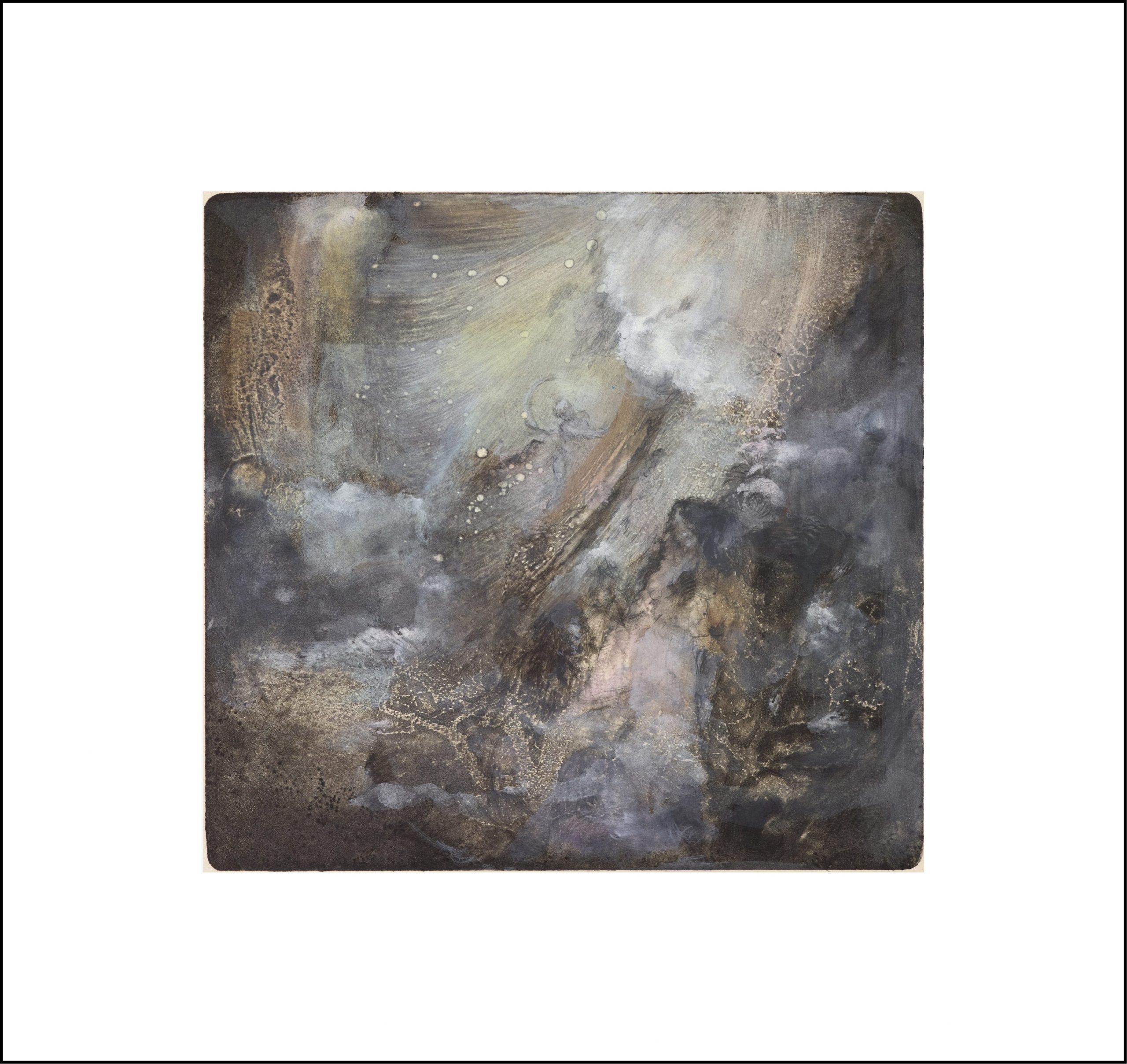
Andrew Chalk — artist and founder of Faraway Press records — joins us this autumn to present a rare exhibition of his otherworldly landscapes and unbridled depictions of the imagination.
Containing large-scale monochromatic prints, intricate pastel illustrations, and a retrospective of Faraway Press special edition releases, the exhibition is is co-curated by Louis Stevenson Miller and Ecka Mordecai, Andrew’s long-standing musical collaborator, who first encountered the pieces during a visit to his rural Yorkshire home.
“I was aware of Andrew’s black and white prints from when he was still running Faraway Press, but it was after visiting his home that I understood the scope of his creative output over the past few decades. As well as the monochromatic prints he’s known for, I discovered heaps of illustrative works; landscapes washed in pastel hues, short stories written in English and Japanese next to sketches of sleeping cats, shopping lists and quaint vignettes.”
Andrew is accomplished in the craft of printmaking, bookbinding, letterpress and pattern design, but beyond this, there’s a delicate, whimsical, and notably domestic aspect to his work.
The exhibition runs from 14th November, 2024 – 14th February, 2025 and includes a series of matinee and evening concerts. Note the matinee performance starts at 16:00 and will be followed by a two hour break before the evening concert starts at 20:00. Tickets are £5/£10.
Tom James Scott / Teresa Winter & Mia Windsor
Tom James Scott, Teresa Winter and Mia Windsor join us on 16th November at the opening weekend of the exhibition. Tom has collaborated with Andrew on the projects Elodie and Circæ and appeared on many of his solo records released through Faraway Press.
Richard Youngs & Daniel O’Sullivan
Richard Youngs and Daniel O’Sullivan return to Bound & Infinity on 30th November in an ever changing new form. Their last collaboration here inspired the upcoming album Persian Carpets, an impromptu zither and piano performance.
Ecka Mordecai / Alice Vincent-Barwood
Ecka Mordecai, a long standing collaborator of Andrew’s and co-curator of the exhibition, joins us for the closing ceremony of the exhibition alongside in-house artist and musician Alice Vincent-Barwood. Note there is no matinee performance, the show starts at 20:00.
G O E T H E A N S C I E N C E, P H I L I P F R A N S E S
Johann Wolfgang von Goethe was a German poet, playwright, novelist and scientist who had a profound influence on the development of European thought, on the philosophers, G. W. F. Hegel, F. W. J. Schelling and Friedrich Nietzsche, and in the arts, through Rudolf Steiner, on Wassily Kandinsky, Hilma af Klint and Joseph Beuys.
Goethe’s way of science emphasises the importance of the experience over a purely theoretical explanation. “We should take the measure for knowledge”, he says, “not from ourselves”, i.e. from pre-conceived ideas that enter unconsciously into the outcome of an experiment, “but from the circle of what we observe”.
To re-introduce abstract science with the process of participating in the phenomenon, Goethe created an observation method, combining sensory perception with active and passive imagination exercises which he described as “delicate empiricism”. These observation methods were explored fully in his work on optics, and the metamorphosis of plants, and were enlarged in the twentieth century by Rudolf Steiner according to theosophic practices.
We are delighted to announce a collaborative partnership between Philip Franses and Bound & Infinity to offer two self-contained modules on Goethean Science, on optics, and the metamorphosis of plants.
Philip Franses was formerly head of Holistic Science at Schumacher College in Dartington for over ten years, during which time he worked closely with Henri Bortoft, Maragaret Collaquon and Brian Godwin. To provide an introduction to the course, Bound & Infinity will be reprinting On the Experiment as Mediator Between Subject and Object by Johann Wolfgang von Goethe, with a supplementary essay by Henri Bortoft, available here.
Two Fold Vision: Goethe’s Dark and Newton’s Light
“Now I a fourfold vision see and a fourfold vision is given to me, tis’ fourfold in my supreme delight and threefold in soft Beulah’s night and twofold always, May God us keep from Single Vision and Newton’s Sleep”. — William Blake
Modern science, and the scientism based on it, has made an important contribution to the evolution of ideas and consciousness. Yet, far from being the only way of understanding the universe, the empirical method is merely one way of conceiving the nature of reality on a scientific basis.
In this module, we re-create the experimentum crucis — bending white light into its constituent colours through a prism — comparing Newton’s theory with Goethe’s practice — looking through the prism, and experiencing colour at the boundary of darkness and light.
Goethe’s way of science pre-supposes the existence of a new organ of sense perception. Looking at nature, not “divided, and in pieces”, but “striving out of the whole into the parts”, we go beyond the single vision
By going beyond the single vision and understanding how Goethe and Newton’s approaches compliment each other we can look at nature
By comparing Newton and Goethe’s different approaches and understanding how they compliment each other, we go beyond the Single Vision, looking at nature, not “divided, and in pieces”, but “striving out of the whole into the parts”.
3rd – 6th August, 2024 / suggested donation: £25 / please RSVP
The Metamorphosis of Plants
“It came to me in a flash, that in the organ of the plant which we are accustomed to call the leaf lies the true Proteus who can hide or reveal himself in all vegetal forms. From first to last, the plant is nothing but leaf, which is so inseparable from the future germ that one cannot think of the one without the other.”
This is Goethe’s account of the Urplanze or “Plant Archetype” as it appeared to him whilst walking in the Palermo Gardens in Sicily. The continual process that can be observed throughout the leafing, flowering and fruiting stages of the plant is what he describes as the metamorphosis.
When shown a diagram of the Urplanze, Friedrich Schiller remarked, “that is not an experience, that is an idea”, to which Goethe replied, “then I am very glad to have ideas without knowing it, and even to see them with my own eyes.”
Following the observation exercises Exakte sinnliche Wahrnehmung (“Exact Sensorial Perception”) and Exakte sinnliche Phantasie (“Exact Sensorial Imagination”), participants are encouraged to draw and describe a chosen plant ally before recreating in the mind’s eye a visual perception of the plant coming into being. This is a fascinating self-directed study on the nature of Being and Becoming.
23rd – 26th November, 2024 / suggested donation: £25 / please RSVP
T H E P R O M E T H E U S T R U S T
The Prometheus Trust hold regular meetings at Bound & Infinity for those interested in the living tradition that traces its roots back to Plato, Pythagoras and beyond. No prior acquaintance with philosophy is necessary, all are welcome.
Orphic Myth and Memory
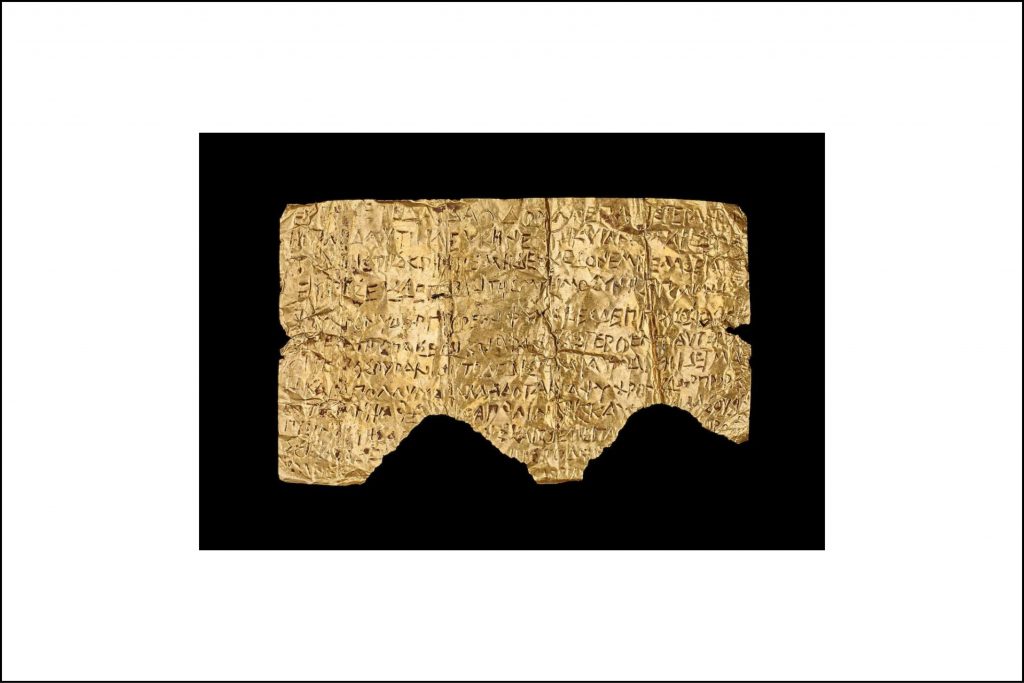
You will find a spring on your left in Hades’ halls and by it the cypress with its luminous sheen. Do not go near this spring or drink its water. You will find another, cold water flowing from Memory’s lake; its guardians stand before it. Say: “I am a child of Earth and starry Heaven, but descended from Heaven; you yourselves know this. I am parched with thirst and dying: quickly, give me the cool water flowing from Memory’s lake.” And they will give you water from the sacred spring and then you will join the heroes at their rites. This [is the …. of Memo]ry: [on the point of] death… write this… the darkness folding [you] within it. — From the Petelia Gold Tablet
“The Grecian theology”, says Thomas Taylor, “which originated from Orpheus,” was also taught by Pythagoras and Plato, “by the first of these… mystically and symbolically; by the second, enigmatically, and through images; and scientifically by the third.“
Orpheus is remembered for his descent into the Underworld to bring Eurydice back from the land of the dead. In the ancient world, he was also celebrated as the founder of the Dionysian Mysteries who introduced theology into Greece and to Homer. Since Aristotle however, opinion has been divided on whether or not he was a real person and how much his influence has informed the mystical teachings of ancient Greece.
In recent years, an increasing number of votive offerings, such as the Petelia Gold Tablet, have been found buried with aspirants, often inscribed with instructions to the initiate on how to navigate through Hades. These, and other artefacts, including newly discovered Orphic poems, suggest that Orphism may have travelled from the outskirts of Thrace into the mainland of Greece, originating with wandering bards and shamans.
Learning, says Plato, is the process of uncovering knowledge in the soul that we possess already since before birth. Looking at the numerous references to Orphic myth found throughout Plato’s dialogues, we will explore how much the cult of Orpheus appears to inform Platonic doctrines of reincarnation, salvation and enlightenment.
25th April, 2025 / suggested donation: £5 / 19:00 start / you can read the paper here
Eikos Muthôs: A Story of Likeness
According to the definition, an allegory is “a figurative discourse in which something is intended other than is contained in the words literally taken.” In other words, an allegory hints at what cannot be spoken of. It is for this reason that Timaeus, calls his narration eikôs muthos or “a story of likeness”.
The Timaeus has the recognisable attributes of a visionary or received text; it’s interpretation has remained inexhaustible; and throughout the centuries, in both the East and West, its readers have divined the world within and without from its pages.
Making the distinction between the eternal — things which are, and the temporal — things which are in process, the Timaeus describes how these are necessarily the result of certain causes. In this meeting we will be discussing the three primary causes; the “efficient cause” or the Demiurge, the “paradigmatic cause” or Autozoon, and the “final cause”, and looking at how they react upon one another to create the living cosmos.
22nd November, 2025 / suggested donation £5 / 19:00 start / you can read the paper here
The Phaedo: An Introduction to Platonic Philosophy
Ancient biographies tell us, before travelling to Egypt and Chaldea, Plato first studied the dramatic works of Aeschylus, Sophocles, and Euripides. In no other dialogue is this more apparent in the structure of the narrative than in the Phaedo.
Saturated in the mystery teachings throughout, the Phaedo is set during the Theseia, an ancient Athenian festival held in honour of its founder, Theseus, and the Minotaur. As part of the celebration, Theseus’ ship, its stern decked with garlands of flowers, makes its annual pilgrimage to the holy island of Delos during which time the execution of prisoners is strictly forbidden. Confined to his prison cell, Socrates addresses a small group of disciples whilst awaiting his execution.
All of life is a preparation for death, says Plato. With this in mind, Platonic philosophy can be seen as a Western counterpart to Eastern enlightenment traditions. As an introduction to Platonism, Tim and Miranda Addey consider how the subtle use of imagery and symbolism can inform our understanding of the myth as it unfolds discretely in the background of the play. This is the first in a regular series of monthly meetings at Bound & Infinity on Platonic philosophy with The Prometheus Trust.
13th September, 2024 / suggested donation: £5 / 19:00 start / you can read the paper here
N O S H O W , S I L E N T M O V E S
“Silent moves, the feet of angels bright…” House band No Show perform the album Silent Moves in full.
“Led by brothers Louis and Harry Stevenson Miller, No Show is a rotating line up that has included Daniel O’Sullivan, Alex Pierce and Ecka Mordecai. While running an esoteric bookshop “Bound & Infinity” in Manchester’s Northern Quarter, publishing small runs of literature and poetry and hosting tea ceremonies, No Show make finely spun and deeply spacious music. Viewing the most elemental, fibrous and filigree aspects of silver age pop through the lens of archaic dramatic tradition. Impossible to classify but perhaps Alasdair Galbraith, Elodie/Mirror, early Velvets and Elvis are the closest antecedents.”
11th November / 21:30 start / free entry